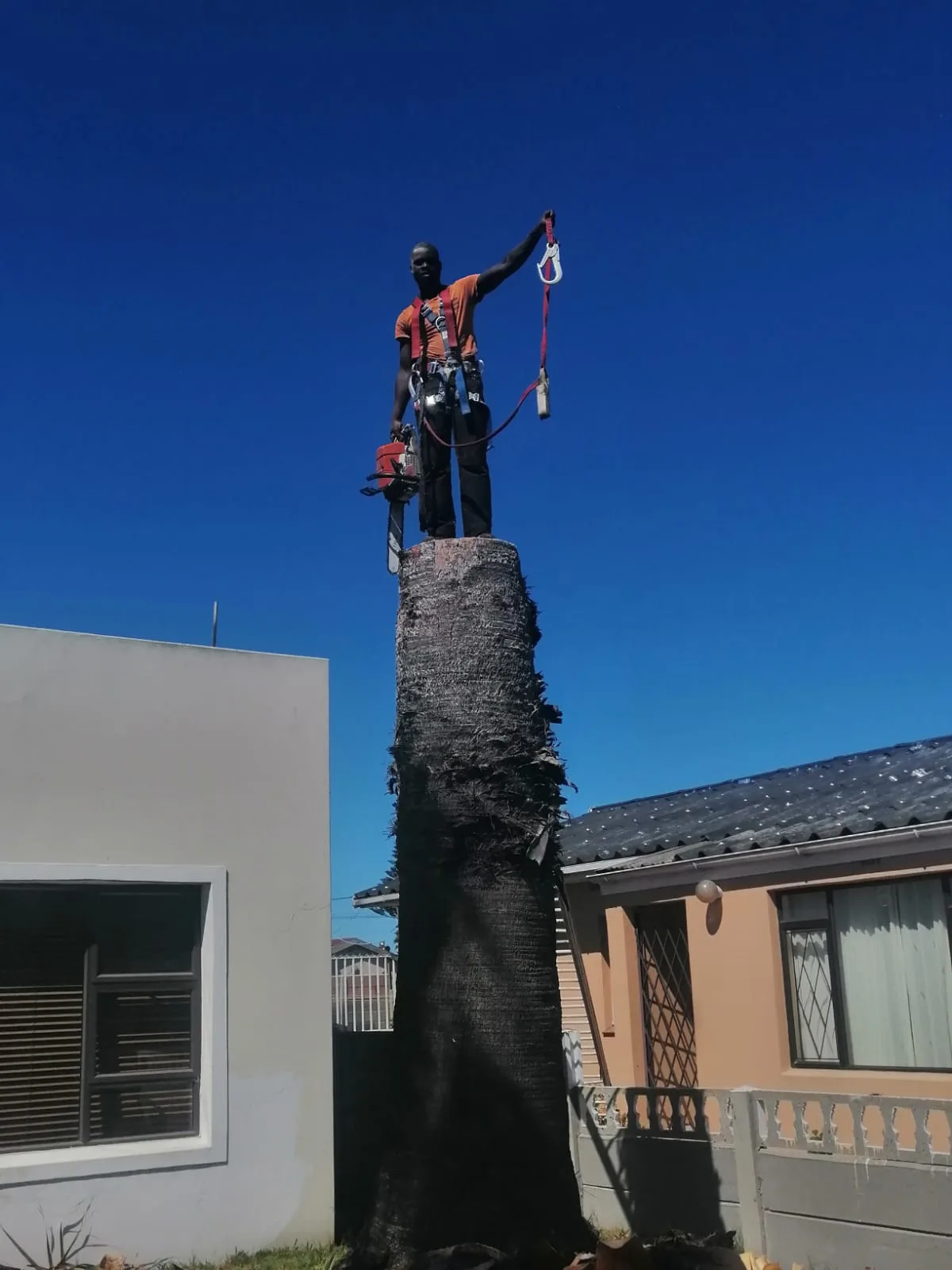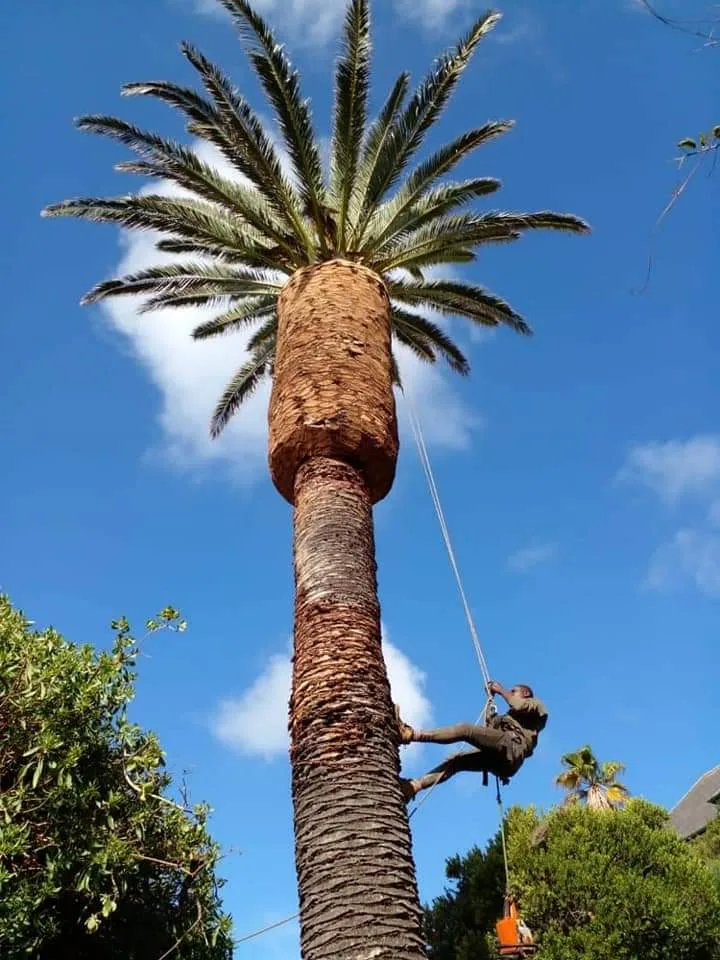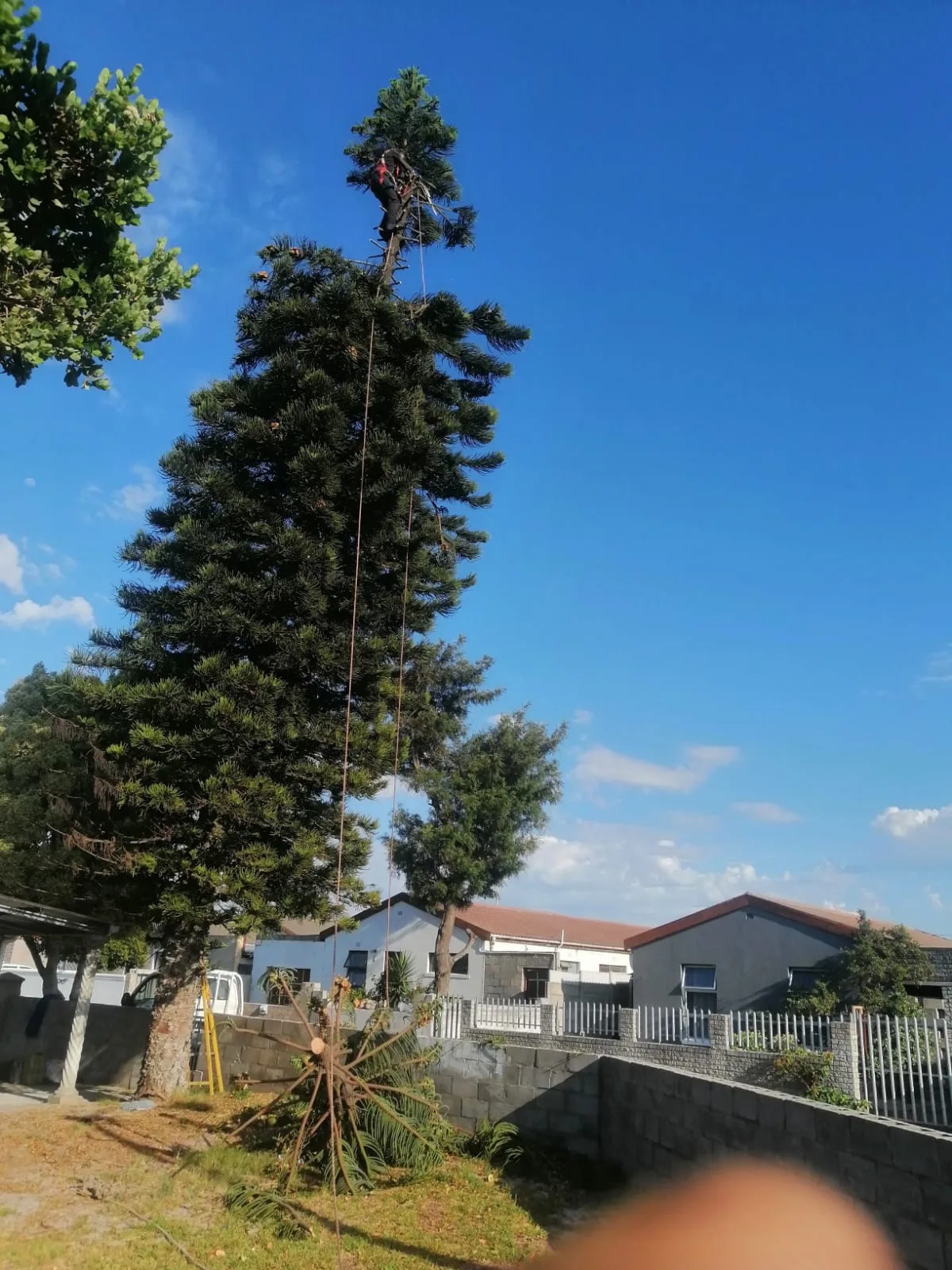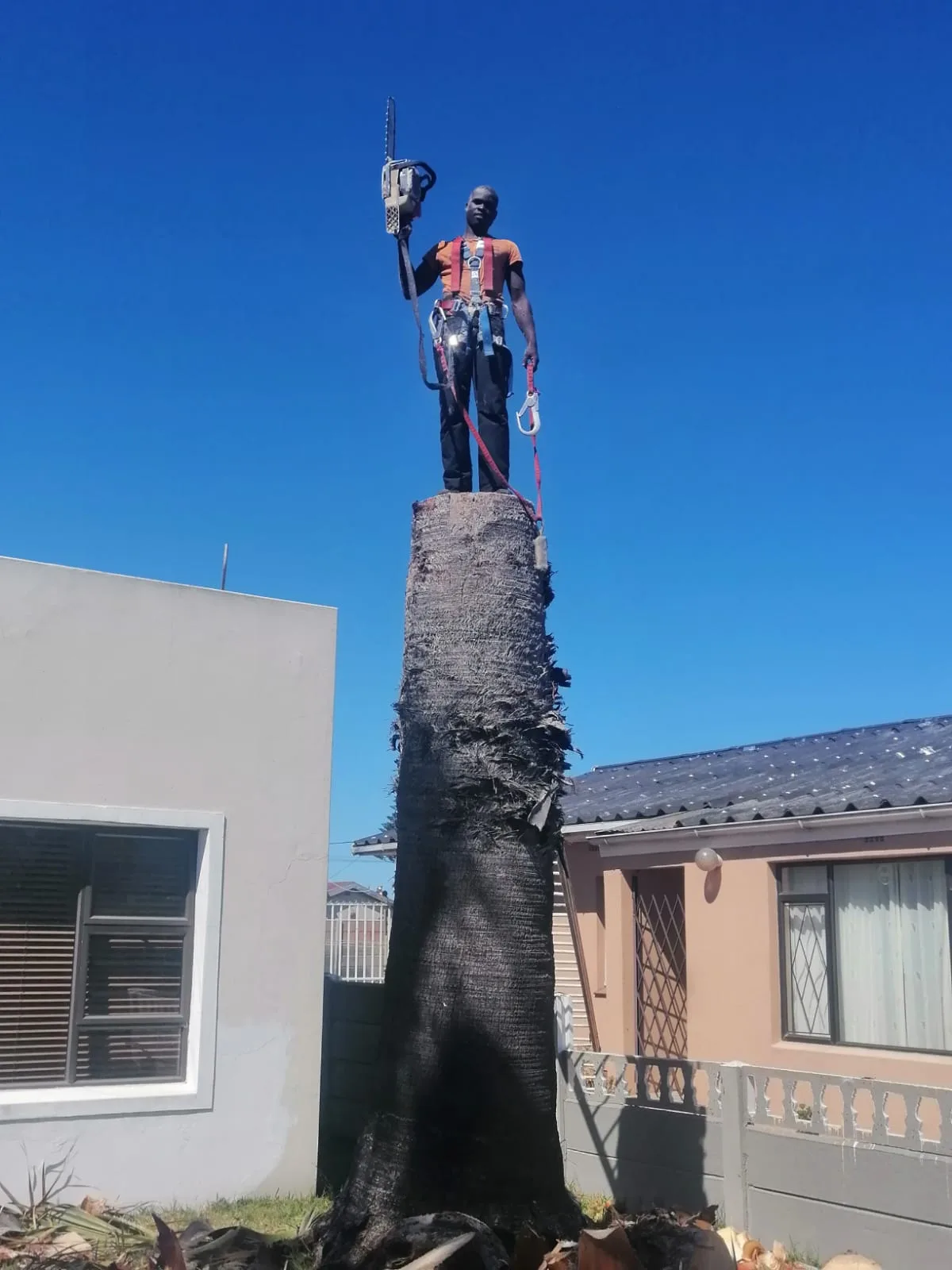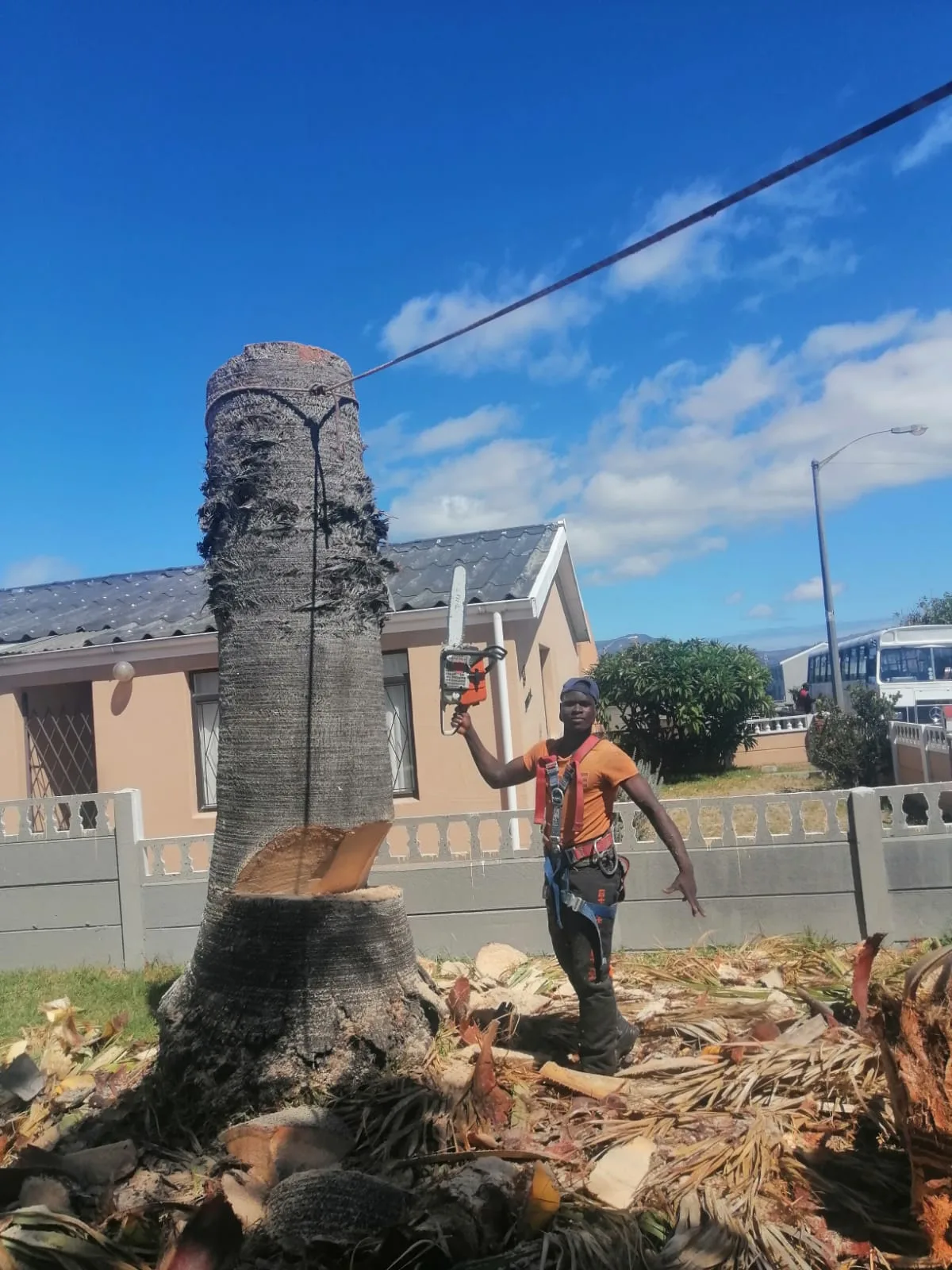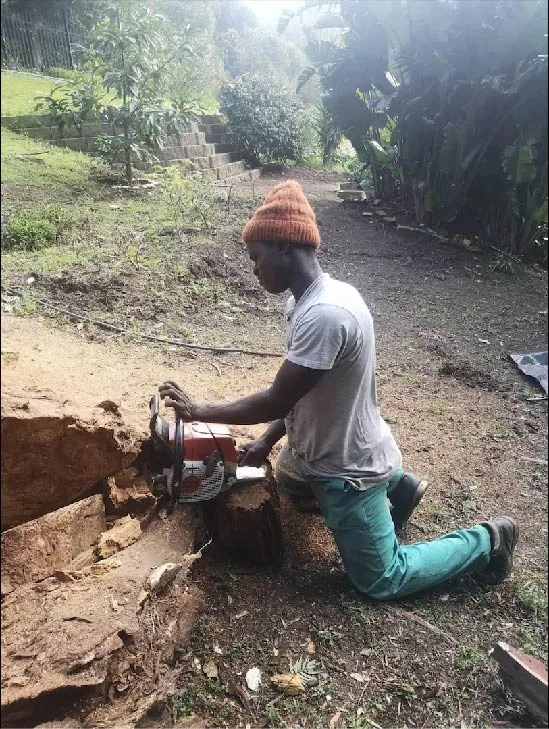
If you want to know how to kill a tree stump for good, the honest answer is that a handful of methods genuinely work, a few are dressed-up garden myths, and the fastest of the lot doesn't kill the stump at all — it grinds it out in twenty minutes. This guide walks through every method South African homeowners actually try, what each one really does, how long it takes, and roughly what it costs in Rands so you can decide whether to reach for a drill or pick up the phone.
Key takeaways
- A glyphosate or triclopyr herbicide painted onto a fresh cut is the most reliable way to actually kill the living roots.
- Epsom salt works but slowly — it dries and rots the wood over roughly 6–12 months, it doesn't poison the roots overnight.
- Copper nails and table salt are the two biggest time-wasters — unreliable on a mature stump, and table salt poisons your soil.
- Killing a stump and removing it are two different jobs. Grinding is the only same-day option and runs roughly R800–R6,000 depending on size.
- Cape Town's invasive gums, Port Jackson and rooikrans re-sprout hard from a live stump — kill the roots or it'll be back.
First, decide: are you killing it or removing it?
These get muddled constantly, and the confusion is what sends people down a six-month dead-end. Killing a stump stops it living and re-sprouting — but the dead lump of wood stays in your garden until it slowly rots away, which can take years. Removing it gets the physical stump out of the ground now, either by grinding it into chips or digging it out roots and all. Most people who search for a stump killer actually want it gone — they just assume poisoning it is the cheap first step. Sometimes it is. Often it's the slow road to the same place.
Kill it (chemical / natural)
Cheap and DIY-friendly, but slow — weeks to months to stop regrowth, then years for the dead stump to rot. Best when the stump is out of the way and you're not in a hurry. Won't help if you need the ground back for paving, a wall or a lawn.
Remove it (grinding / digging)
Done in a single visit, ground 15–30 cm below grade so you can re-plant or pave straight over it. Costs more up front but skips the waiting, the regrowth risk and the rotting eyesore. The right call when the stump's in the way.
The stump-killing methods that actually work
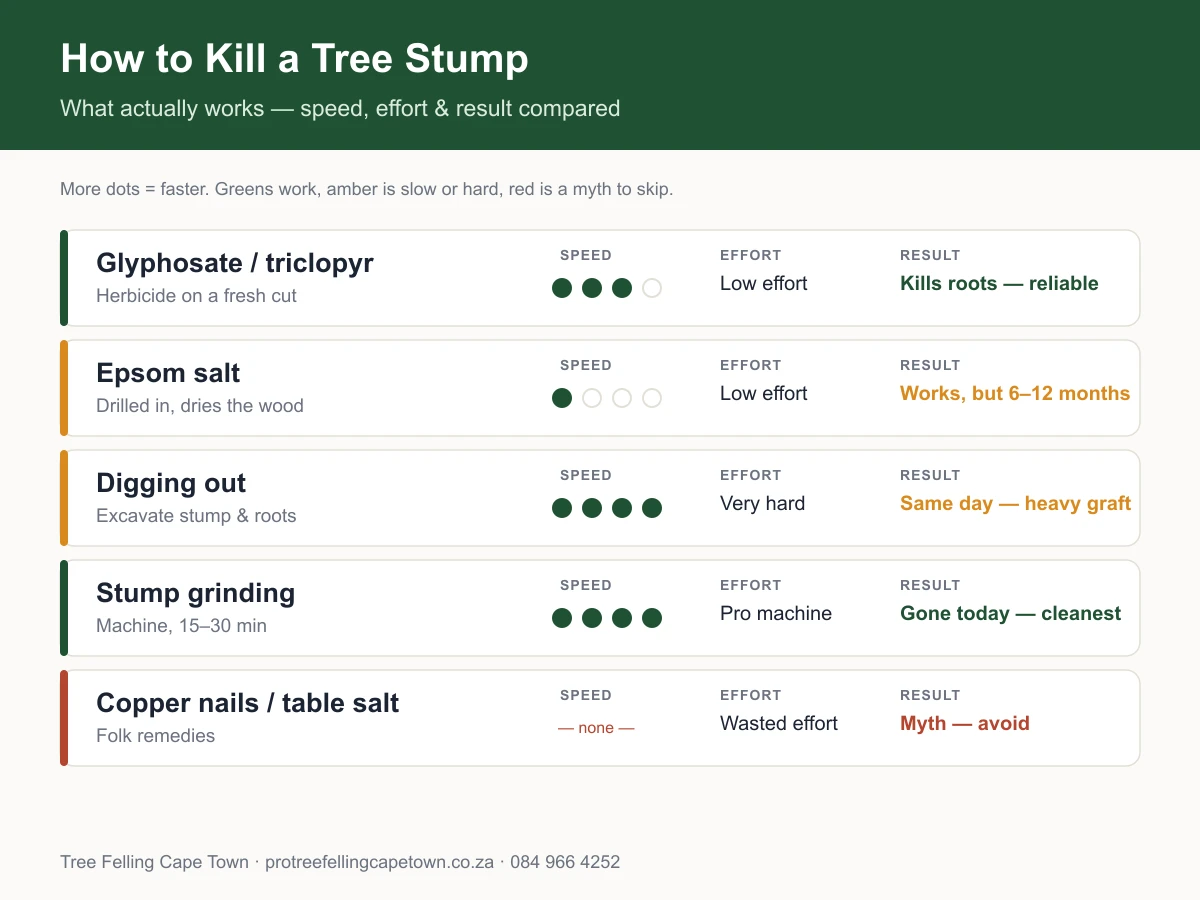
Strip away the folklore and there are really only three things that reliably stop a stump for good: a systemic herbicide on a fresh cut, patient rotting sped up with Epsom salt, or physically taking it out. Here's how they stack up on the things that matter — speed, effort and risk.
| Method | How it works | Time to result | Effort & risk |
|---|---|---|---|
| Glyphosate / triclopyr | Painted on a fresh cut, drawn down into the roots | 2–6 weeks to kill | Low effort; keep off lawn & pets |
| Epsom salt | Drilled in; dries & rots the wood and roots | 6–12 months to rot | Low effort; very slow, soil-safe |
| Digging out | Excavate the stump and main roots by hand | Same day | Very hard graft; can damage services |
| Stump grinding | Machine chips it 15–30 cm below grade | 15–30 min | Pro machine; cleanest result |
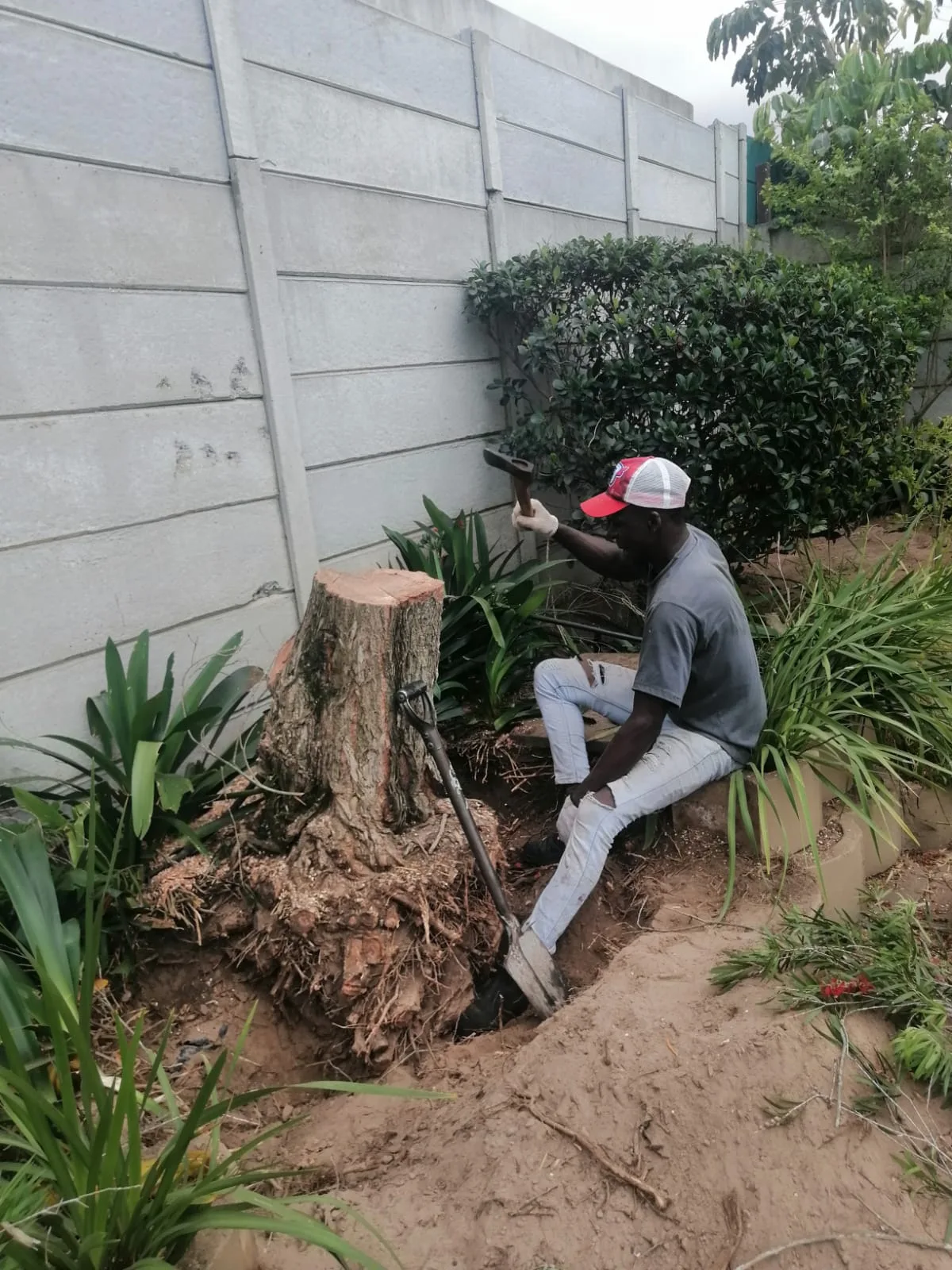
Chemical stump killers: glyphosate and triclopyr
A systemic herbicide is the most dependable way to kill the living root system, and the trick is timing. You want to fell the tree first, then paint a concentrated glyphosate or triclopyr product onto the fresh-cut surface within a few minutes, while the stump is still actively drawing sap downward — the approach Iowa State University Extension recommends for stopping regrowth. That's what carries the chemical into the roots instead of leaving it sitting on dead wood. On an older, already-dry stump you'll get far less uptake — you may need to drill holes or cut a fresh ring of live wood near the bark to give it a way in.
Do this
Apply to a fresh cut the same day, concentrate it on the living outer ring just inside the bark, and use it on a dry, windless day so it isn't washed off. Keep it to the stump surface only.
Watch out
Glyphosate doesn't know the difference between a stump and your lawn — runoff will brown nearby grass and beds. Keep children and pets off until it's dry, and follow the label dilution exactly.
Don't burn it out
Skip the old trick of packing a stump with potassium-nitrate "stump remover" and setting it alight. Open fires are tightly restricted across Cape Town, especially through the dry summer fire season, and a smouldering underground root fire is genuinely dangerous — not worth the risk or the bylaw trouble.
Natural and homemade tree stump killers
If you'd rather not put herbicide in the garden, the natural route does work — it just asks for patience. Epsom salt (magnesium sulfate, not table salt) is the one with real merit. Drill a grid of deep holes into the top of the stump, pack them with Epsom salt, dampen it, and cover the stump to keep rain out. The salt steadily pulls moisture out of the wood and roots, killing the stump and speeding rot from the natural three-to-seven years down to roughly six to twelve months. It's cheap, it's soil-friendly in sensible amounts, and it asks almost nothing of you beyond topping it up.
Epsom salt — worth trying
Genuinely dries and rots a stump over 6–12 months. Soil-safe in moderation. The best natural option if you're not in a rush and the stump's out of the way.
Cover & smother — slow but free
Cutting low and covering the stump with a tarp or thick mulch to starve it of light will eventually weaken regrowth, but it's the slowest path of all and doesn't suit a visible spot.
The myths: copper nails, table salt and "just leave it"
Three "methods" come up again and again and mostly waste your time — and university horticulture services like Illinois Extension say the same. It's worth knowing why before you spend a Saturday on them.
Copper nails
Might see off a thin sapling, but on a mature stump it does next to nothing — and even then takes months to years. The most over-promised trick on the internet.
Table / rock salt
Sodium chloride will dry the stump, but it also poisons the surrounding soil and can harm nearby trees, beds and lawn. Use Epsom salt instead — never table salt.
"Just leave it to rot"
A stump left alone takes 3–7 years to break down, attracts termites and fungi, and on many local species just keeps re-sprouting in the meantime.
Bleach & diesel
Neither is systemic, so they don't travel to the roots — they just sterilise the surface and contaminate your soil. Skip them.
Why a dead stump still grows back in Cape Town gardens
This is the part Peninsula homeowners get caught by. Many of the trees we deal with — bluegums, Port Jackson, rooikrans and Australian wattle — are vigorous invasive species that coppice: they throw up a ring of new shoots from a cut stump and sucker from the roots. Cut one and walk away, and within a season you've got a thicket where the tree used to be. With these, either the roots get properly killed with herbicide on the fresh cut, or the stump gets ground out. Not sure what you're dealing with? That's exactly what our Cape Town tree team sizes up on a free site visit.
What stump removal costs in Cape Town
When the waiting and the regrowth risk aren't worth it, professional stump grinding is the shortcut — a machine chips the stump 15–30 cm below ground level in well under half an hour, and you can plant or pave over it the same day. Here's what that looks like in practice:
Price comes down to the stump's diameter, how easy it is to reach, the timber's hardness, and whether there's buried rubble or services nearby that the operator has to work around. As a 2026 guide for Cape Town:
| Stump size (diameter) | Typical grinding cost | Notes |
|---|---|---|
| Small — up to ~300 mm | R800 – R1,500 | Easy access, soft wood |
| Medium — ~500 mm | R1,500 – R2,500 | Most suburban garden trees |
| Large — ~1 m | R2,500 – R4,000 | Mature oak, gum, pine |
| Very large / multiple | R4,000 – R6,000+ | Bundling saves 10–30% |
The single best way to keep the price fair is to have the stump ground at the same time as the felling, while the crew and machine are already on site — it's the same logic that keeps what tree felling costs down when you bundle the work. For an exact figure on your stump, it takes two minutes to book a free on-site quote.
Frequently asked questions
What is the fastest way to kill a tree stump?
Grinding is fastest overall — gone in 15–30 minutes. If you mean chemically, a glyphosate or triclopyr herbicide on a fresh cut kills the roots in about 2–6 weeks.
Does Epsom salt really kill a tree stump?
Yes, but slowly. Packed into drilled holes it dries out the wood and roots, rotting the stump over roughly 6–12 months rather than poisoning it quickly.
Will copper nails kill a tree stump?
Rarely. They may weaken a thin sapling but do almost nothing to a mature stump, and even then take months to years. It's the most over-hyped method going.
Can I use normal salt instead of Epsom salt?
No. Table or rock salt poisons the surrounding soil and can damage nearby plants and trees. Stick to Epsom salt (magnesium sulfate), which is far gentler on the ground.
Do I need a permit to remove a tree stump?
Grinding an existing stump generally doesn't need one, but felling a protected or street tree can. When in doubt, read our guide to when a tree-felling permit is needed in Cape Town first.
How much does stump removal cost in Cape Town?
Most garden stumps run R800–R4,000 to grind, depending on size and access. Bundling with felling or doing several at once usually saves 10–30%.
Killing a stump yourself is perfectly doable if you've got patience and the stump's tucked out of the way — paint a fresh cut with herbicide, or take the slow natural road with Epsom salt, and skip the copper-nail folklore. But if it's in the way, if it's a re-sprouting invasive, or you simply want it gone today, grinding ends the story in one visit. Either way, if you'd like a hand or an honest price, we're a phone call away.
Keep reading
How to Cut Down a Tree Safely (And When to Stop)
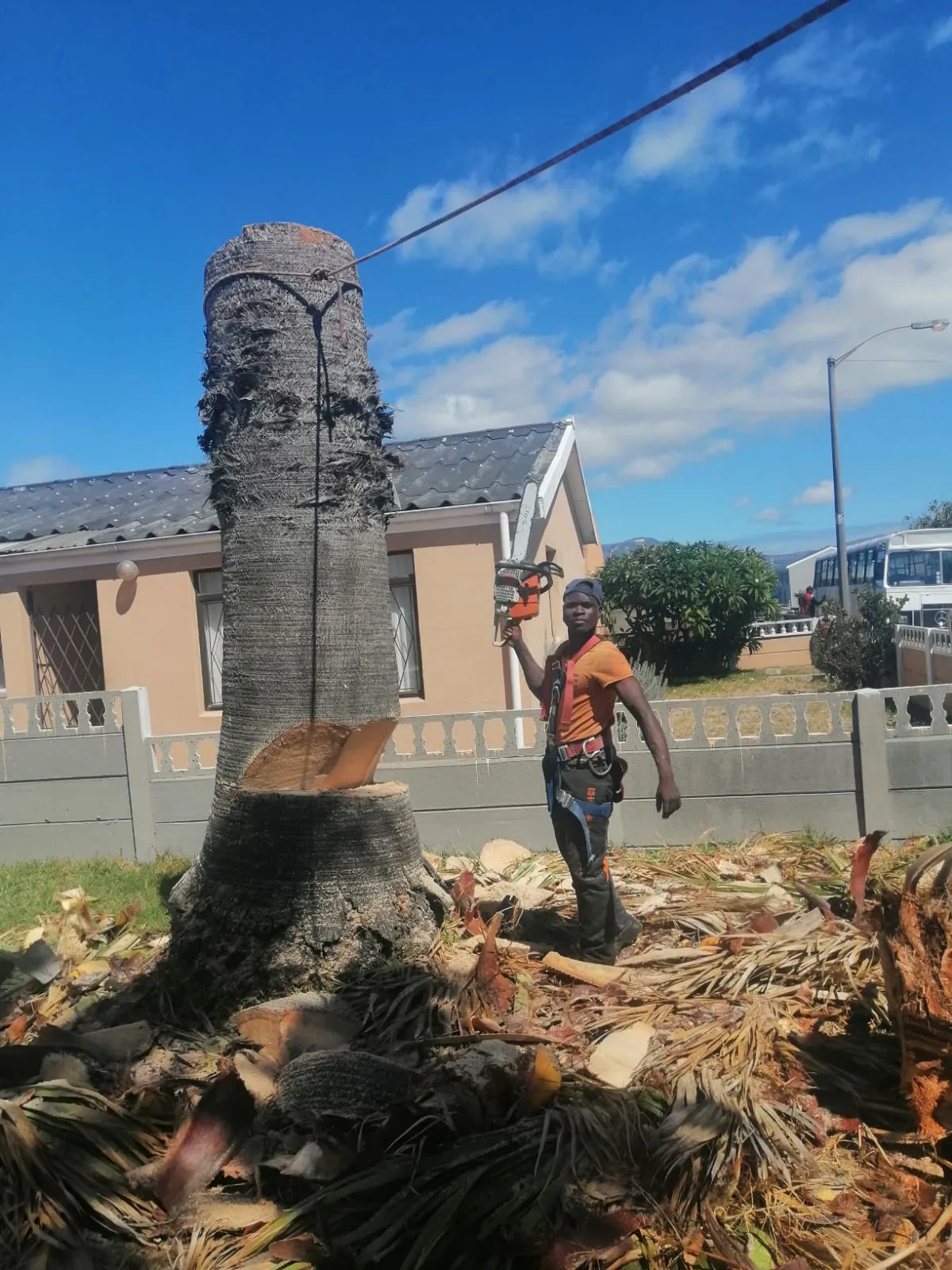
Most people searching for how to cut down a tree are really asking a different question: can I do this one myself? Here is the sequence a trained feller works through, what the hinge actually does, and the situations where the honest answer is to put the saw down and phone someone.
Blue Gum Tree Removal in Cape Town
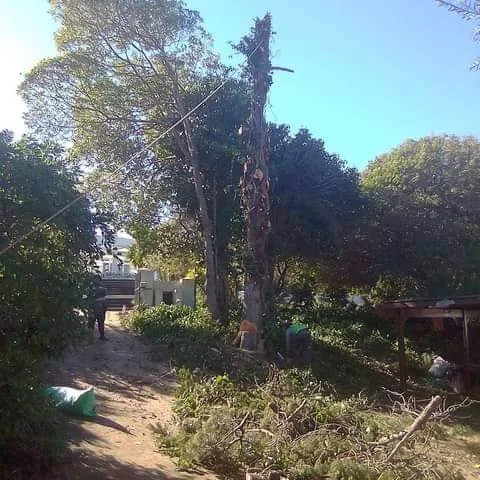
A mature blue gum in a Cape Town garden sits in an odd legal spot: the species is listed as an invasive, but a big urban trunk is often specifically exempt from the duty to remove it. Here is which gums are actually listed, the tape-measure test that decides it, why cutting one down never finishes the job, and what a safe take-down in a suburb actually involves.
10 Signs a Tree Needs to Be Removed (And When It Doesn't)
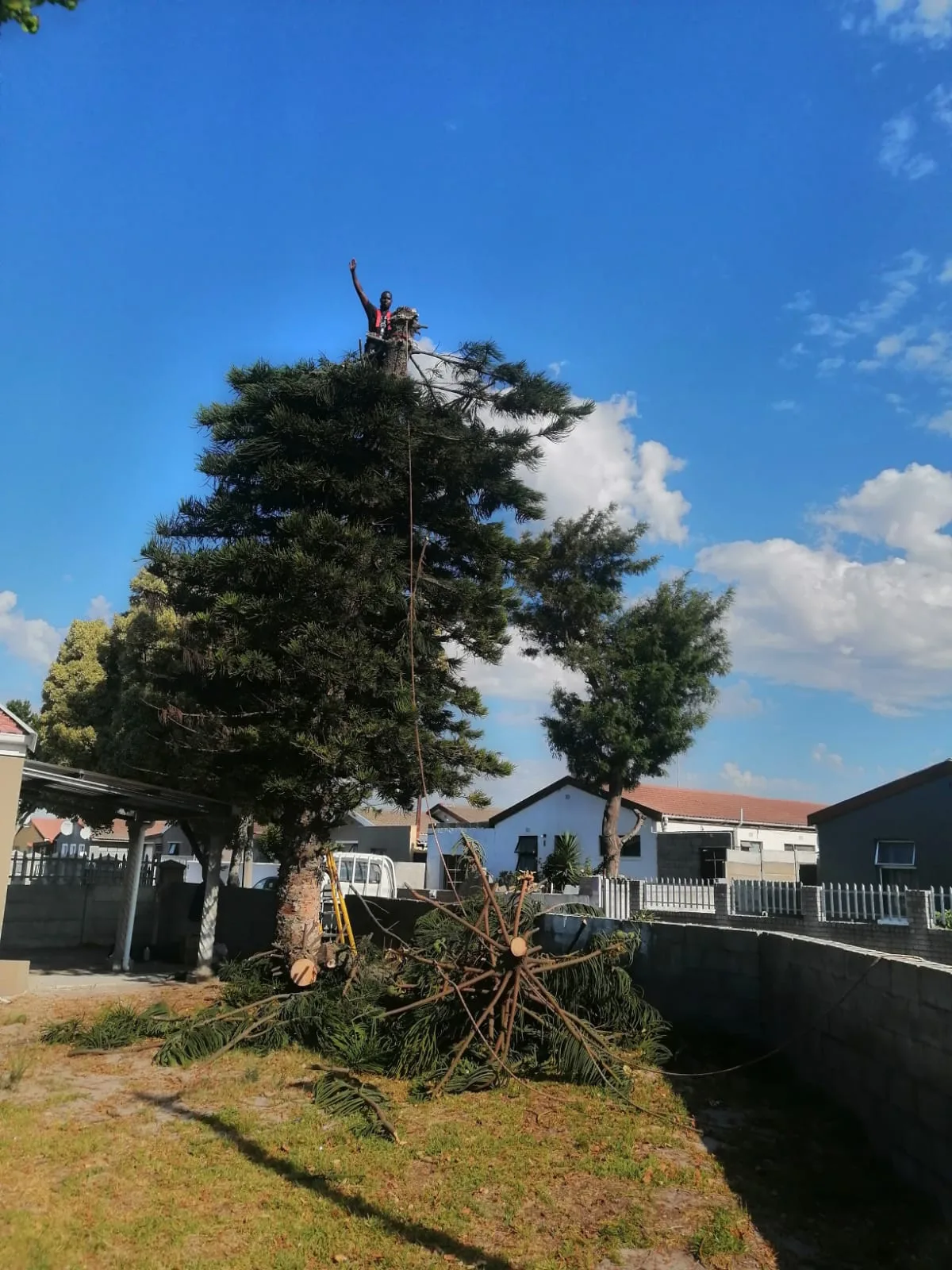
Most of the trees people ask us to remove don't need removing. This is the honest diagnostic list — what a lean, a bracket fungus, a hollow trunk, a crack or a cut root really tells you, which signs mean act today, and which ones a prune will settle.